Key highlights:
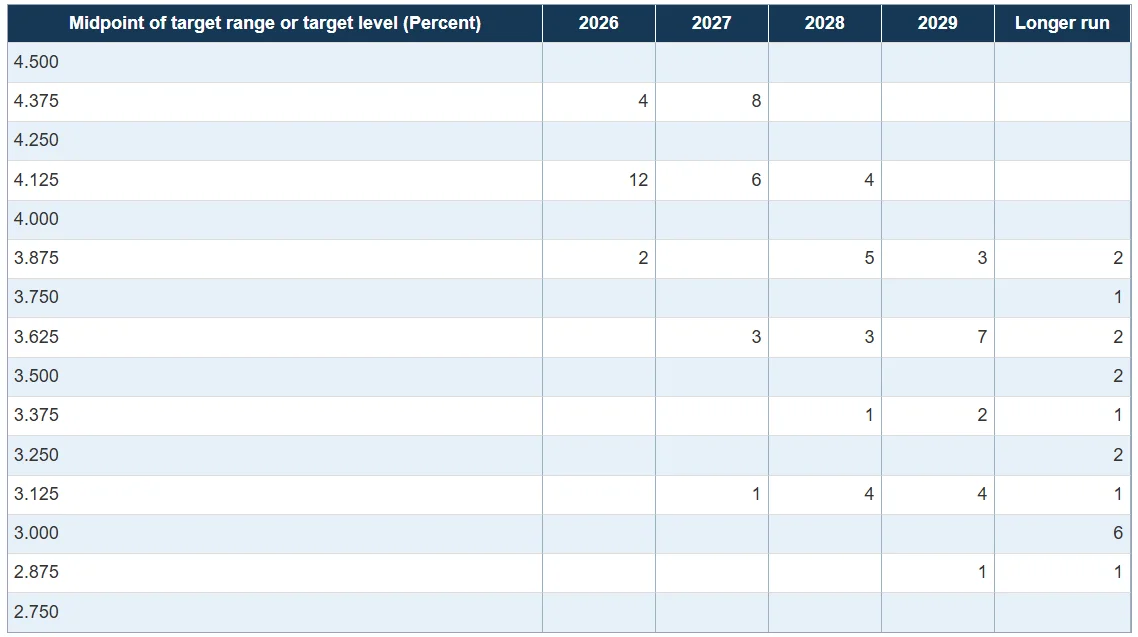
- The Fed raised rates 25bps to 3.75%–4% in a unanimous FOMC vote, with 16 of 18 officials projecting at least one more hike this year
- Bitcoin held above $76K with a muted reaction, as the hike was widely priced in, though $82M in BTC perpetual net selling followed the announcement
- On-chain structure shows potential floor-building: 6–12 month holders now account for 30.8% of realized cap, with key support at $73K–$74K
The
The bigger concern for crypto markets is the path ahead, as Fed projections showed 16 of 18 officials expected at least one more rate increase before year-end, while four projected two additional hikes.
Why is the Fed keeping rates high, and what does it mean for Bitcoin?
The Federal Reserve raised interest rates despite pressure from President Donald Trump for lower borrowing costs, with Fed Chair Kevin Warsh saying inflation remained too high and had stayed above the central bank’s 2% target for more than five years.
The decision is already pushing borrowing costs higher, with major U.S. banks, including JPMorgan, KeyCorp, and BNY, raising their prime lending rates to 7% from 6.75%.
Mortgage rates also remain elevated, with the average 30-year fixed rate at 6.76% and the 15-year rate at 6.09%, according to Freddie Mac.
From December 2008 to present, the chart reflects the midpoint of the Federal Reserve’s target range. Source: Federal Reserve Bank of New York
Warsh said the Fed cannot directly control prices for oil, food, or other individual goods but can prevent temporary price shocks from spreading into broader inflation.
The central bank’s latest projections suggest rates could rise further, with most policymakers expecting another increase before the end of the year.
Higher rates generally make borrowing more expensive for households and businesses while potentially improving returns on savings. Treasury yields and other borrowing costs have also risen in recent months as markets adjust to tighter monetary conditions.
The outlook creates a challenging backdrop for Bitcoin and other cryptocurrencies, as persistent inflation could keep the Fed focused on tighter monetary policy, potentially reducing liquidity available for riskier assets such as crypto.
However, a resilient U.S. economy could continue supporting investor risk appetite and limit the immediate impact of higher rates on digital assets.
What is next for BTC? Could Bitcoin be building a floor?
Bitcoin’s on-chain structure is showing signs of a potential mid-cycle floor, even as the cryptocurrency remains under pressure following its rejection near $81,000.
CryptoQuant data shows coins held for six to 12 months now account for 30.8% of Bitcoin’s realized cap, up from 16.2% in December.
At the same time, the three-to-six-month supply has fallen to 7.7% from 24.8%, suggesting coins are gradually aging into longer-term holding bands.
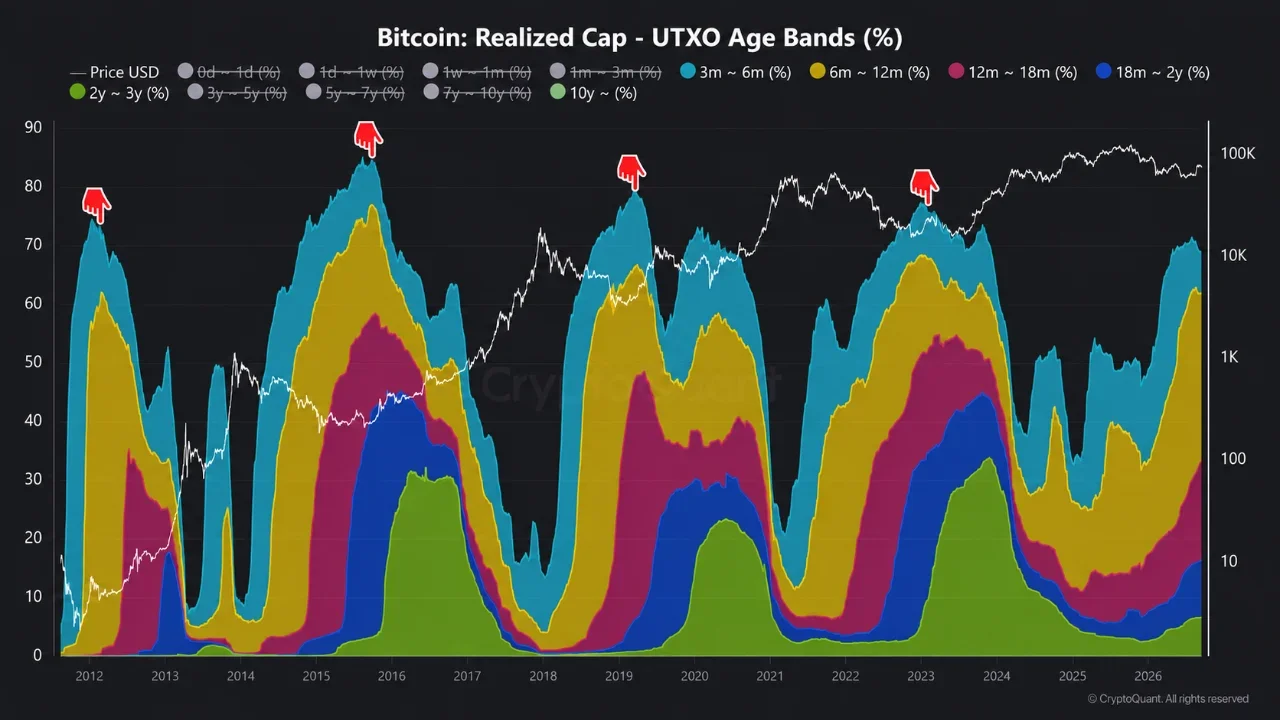
Source: CryptoQuant
The shift indicates that some short-term holders are becoming longer-term holders rather than moving coins to exchanges, reducing immediate selling pressure.
Bitcoin’s price structure remains weaker in the short term as it is trading within a descending corrective channel, with $73,000-$74,000 acting as key support.
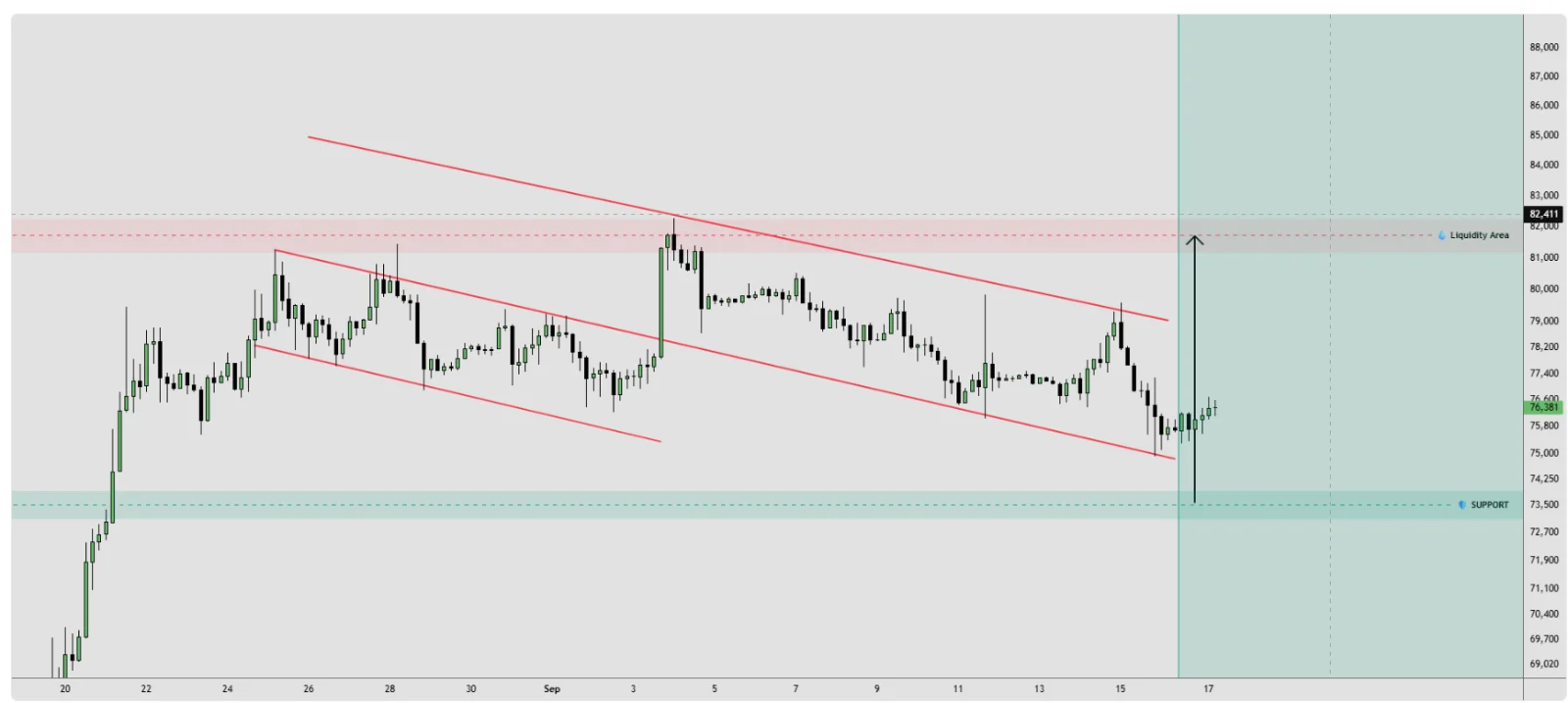
Source: Tradingview
A sustained break below that zone could expose lower liquidity areas, while a move back above the descending resistance near $82,000 would strengthen the recovery structure.
CryptoQuant’s analysis also points to a sharp decline in the percentage of UTXOs held at a loss, a pattern historically associated with transitions away from bearish phases.
Source:: Bitcoin Holds Above $76K Despite Fed’s First Rate Hike Since 2023