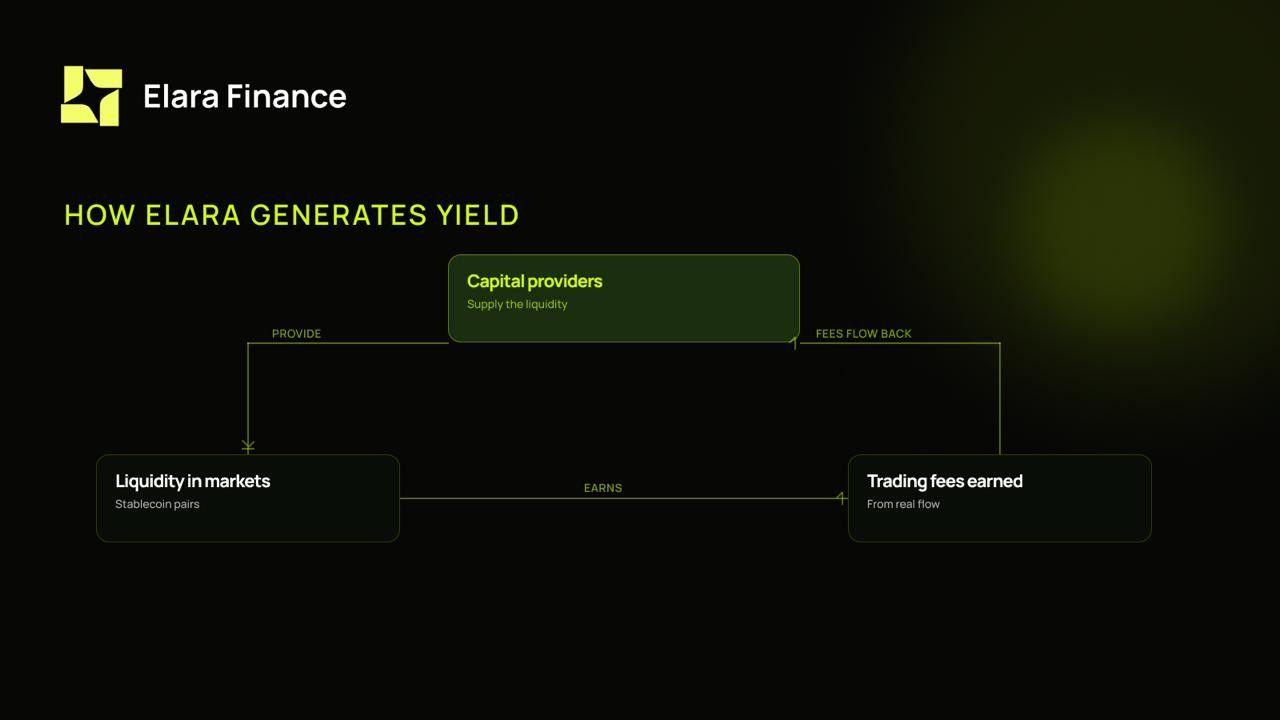
has probably noticed the yield isn’t a single fixed figure. It shifts. The underlying strategy generates a native yield across all the capital deployed in the system, but only the portion staked into sELUSD receives it. When some elUSD holders choose to stay liquid instead of staking, the yield that would have gone to them concentrates onto the smaller group that did stake. That’s the mechanism behind the 15% to 20% range Elara points to publicly. It falls out of the staking ratio at any given point in time.
Evan’s warning for the real businesses applies here too. Trading fees are pro-cyclical, so value them on through-cycle numbers and never on peak annualized. Elara publishing a floating figure instead of a fixed one is the same discipline. A fixed number would be the marketing number. The floating one is the real one.
Elara’s Sherlock audit and risk framework were already covered in detail on Hackernoon, full contract coverage, published report, the works. Worth a look if you missed it.
Who this is for
A floating, fee-backed number is exactly what a certain kind of allocator has been waiting for.Corporate treasuries sitting on idle dollar reserves, fund managers parking capital between deployments, DAOs and protocol treasuries that want yield without active management, and qualified individual investors looking for a dollar-denominated alternative to a traditional savings account. What they share is a need for the yield to come from somewhere real.
That’s where Evan’s cleanest idea lands. The smart way to hold onchain exposure is to own the infrastructure that collects the toll, and Elara is that idea applied to the dollar layer. It doesn’t have to guess which stablecoin wins. Every swap between them pays the same fee, and Elara’s depositors collect it.