Picking the wrong binary options trading platform can be very costly. It can slow you down, hide fees, and even prevent you from withdrawing your money.
So in this guide, after 7 years of experience trading, I’m picking the 6 best binary options trading platforms in 2026.
I was mainly looking for platforms that keep things clear, from payouts and minimum trade sizes to charting tools, mobile access, and order speed.
Let’s dive in!
Selection criteria: How I picked the best binary options trading platforms
Not every binary options broker that looks polished is worth it. Some hide fees, some move slowly at withdrawal time, and some are just hard to trust once you get past the homepage.
So my list is built around the stuff that actually affects your trades. That means I looked at safety first, then at cost, speed, tools, and how easy the platform is to use when real money is on the line.
Regulation and trust came first
A platform can have great colors and still be a bad choice. The first filter was simple: Does the broker operate under a real regulator, and does it give clear information about who owns it and where it’s based?
I excluded anything with vague company details, poor transparency, or obvious warning signs. If a platform makes it hard to figure out how it’s governed, that’s already a problem.
Payouts had to be competitive and consistent
Binary options live and die on payout structure. A platform with decent tools but weak returns is still a weak pick.
I compared the payout ranges on the trades most people actually use, not just the best-case numbers buried in promo pages. I also paid attention to how clear those payouts were, because a high headline figure means little if it changes without warning.
Fees, minimums, and withdrawals mattered more than marketing
Low deposits are nice, but they don’t tell the full story. A platform can look beginner-friendly and still hit you with poor withdrawal terms or extra charges that show up later.
The better platforms kept pricing easy to read. I gave more weight to:
- Minimum deposit requirements that felt realistic
- Minimum trade sizes that didn’t force oversized risk
- Withdrawal rules that were clear and not loaded with fine print
- Extra fees that were disclosed upfront
Trading tools and usability separated the good from the merely usable
A binary options platform should make trading feel clear, not cramped. I looked for clean order placement, responsive charts, and features that help you manage a trade without guesswork.
The strongest platforms offered useful basics like:
- Clear price charts
- Fast trade execution
- Easy order confirmation
- Demo access for practice
- Simple navigation on desktop and mobile
If a platform makes simple actions feel clunky, it drops in the rankings.
Withdrawal speed and support were part of the test
A broker can look fine until it’s time to get your money out.
I looked for platforms with straightforward withdrawal processes, reasonable processing times, and support teams that actually respond.
If a broker makes withdrawals messy, or support feels impossible to reach, that’s not a small issue.
A strong binary options trading platform should do three things well:
- Let you place trades without friction
- Let you understand your costs before you commit
- Let you withdraw funds without drama
That was the standard across this ranking, and anything that failed on those basics didn’t make the cut.
The 6 best binary options brokers in 2026: Quick comparison
The best binary options trading platform is the one that fits how you actually trade. For some people, that means a clean mobile app and quick order entry. For others, it means better charts, a more traditional desktop layout, or a broker they’ve already used for years.
| Platform | Best for | Regulation |
| 1. Pocket Option | Best overall for simple trading and broad appeal | Regulated offshore by the Mwali International Services Authority (MISA). Not regulated by a major tier-one financial authority. |
| 2. Capitalcore | Traders who prefer simplicity over extras | IFSA.co oversight and Saint Vincent and the Grenadines registration. This is offshore/private registration. |
| 3. Dukascopy | Desktop traders | Regulated by the Swiss Financial Market Supervisory Authority (FINMA) as a bank and securities firm. |
| 4. Deriv | Traders who want an established broker with a long track record | Regulated through different group entities, including MFSA, Labuan FSA, BVI FSC, Vanuatu FSC, Mauritius FSC, CIMA, and UAE authorities. |
| 5. CloseOption | Traders who want a simple, direct trading experience | Licensed by the National Bank of Georgia under license No. B 2-08/3647. |
| 6. IQ Option | Beginners and budget-conscious traders | IQ Option Europe Ltd is regulated by CySEC under license No. 247/14 for EEA users. |
1. Pocket Option
Best for: Best overall
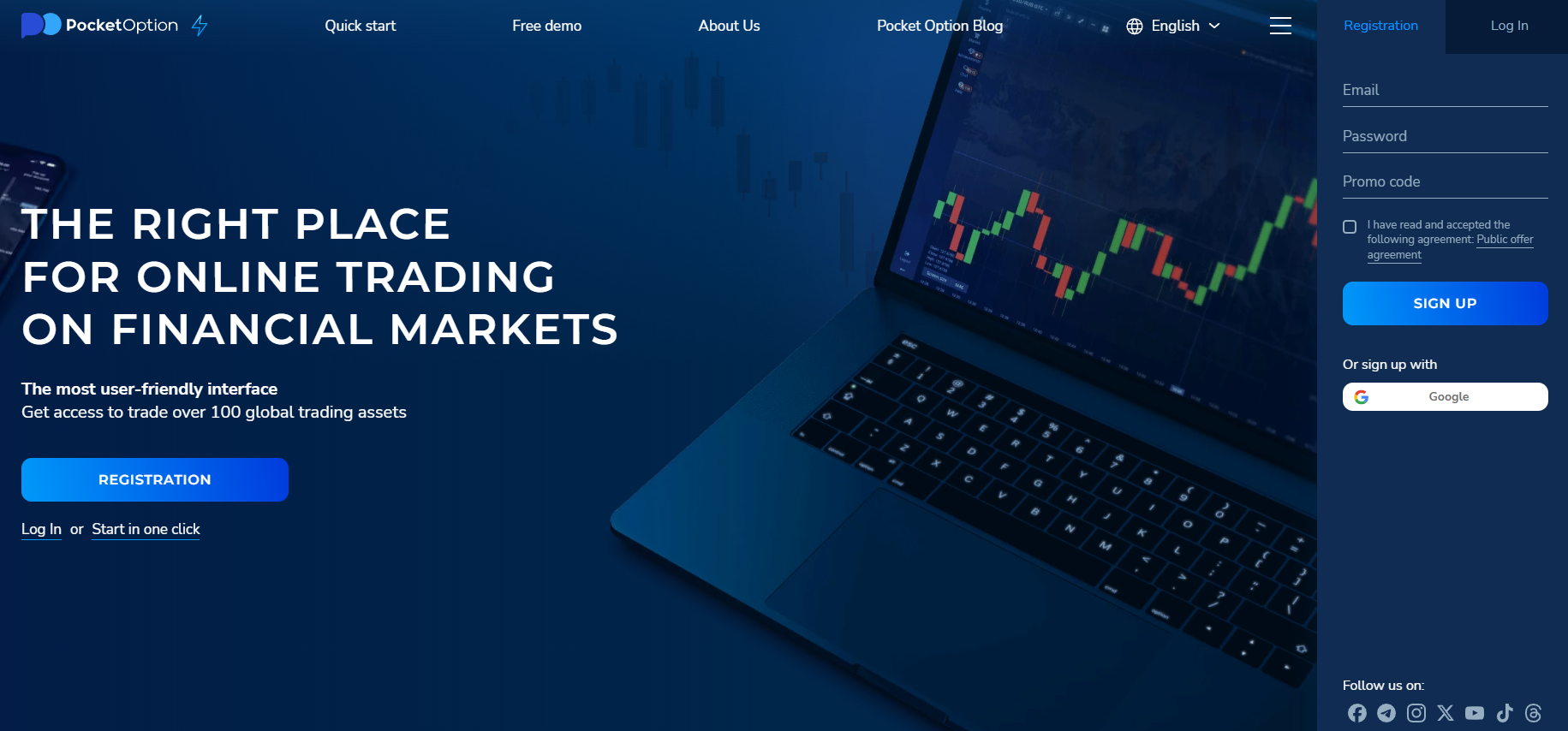
Pocket Option is at the top because it gets the fundamentals right.
- The layout is easy to follow
- The trade flow is simple
- You don’t need to dig through a mess of menus just to place a position
That’s more important that some might think. If you’re a beginner, you want a platform that feels readable on day one. If you’re a casual trader, you probably want speed and clarity more than a long list of features you’ll never touch.
Pocket Option fits both groups pretty well.
Its mobile access is another reason it stays popular. The app-first experience makes it easy to check charts, place trades, and move around without feeling boxed in by a tiny screen.
Add in the trading tools most users expect, and you get a platform that feels approachable without being bare-bones.
Before opening an account, check local availability and the platform’s current terms. Binary options rules, access, and conditions can vary a lot by country.
Pros:
- Clean, beginner-friendly interface
- Strong mobile access
- Broad appeal for casual and new traders
- Simple trade placement and easy navigation
Cons:
- Availability depends on location
- Terms can change, so you need to read the fine print
- Simplicity may feel limiting for advanced chart-heavy users
2. Capitalcore
Best for: traders who prefer a simple trading experience over many extras
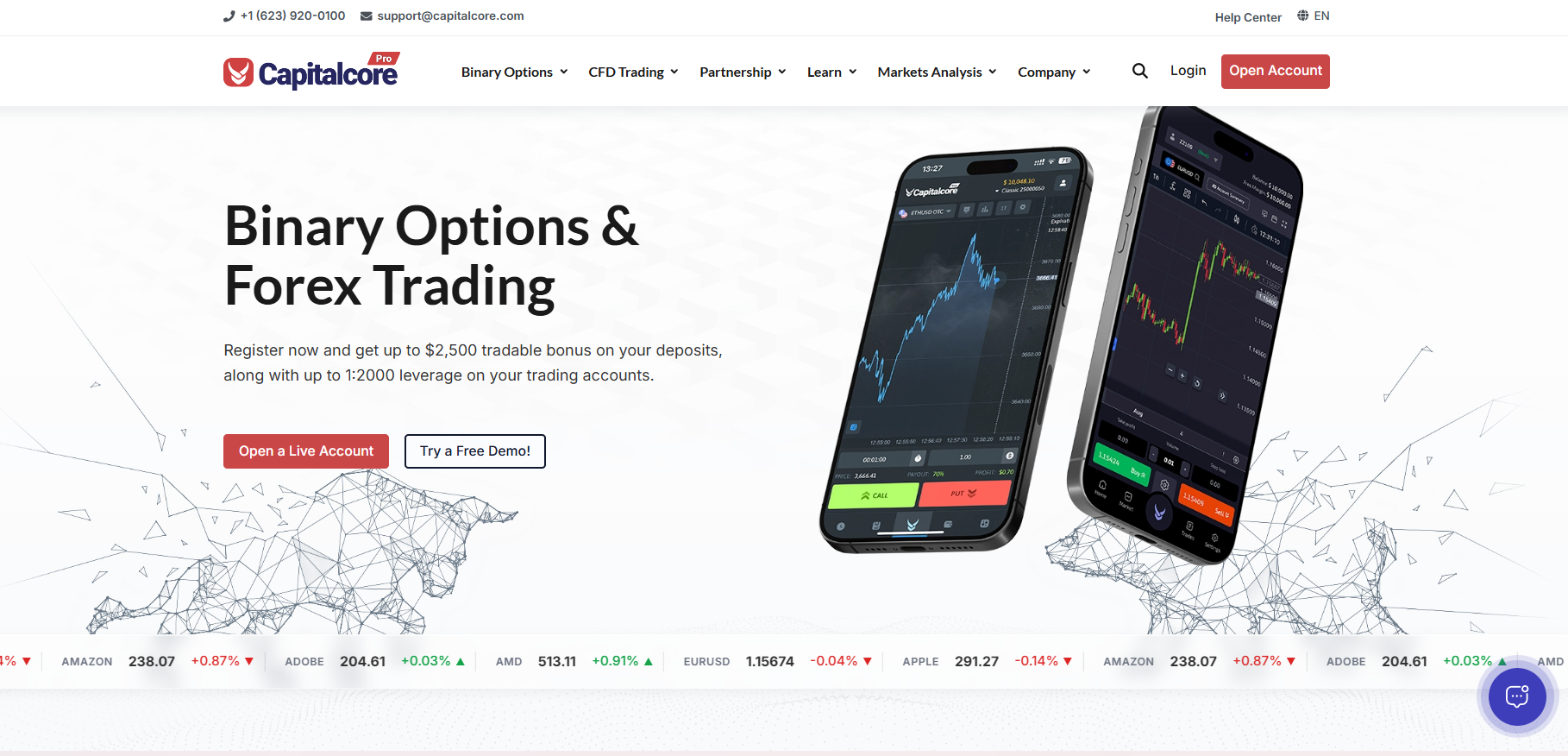
Capitalcore is a name many traders look at when they want a more compact, easy-to-follow trading setup. It is the kind of platform that appeals to users who care more about getting in, placing a trade, and moving on. There’s no fiddling with extra layers of complexity.
That makes it practical for traders who want a lighter platform experience. If you like a straightforward layout and don’t want to spend time sorting through a crowded interface, Capitalcore fits that style better than many overbuilt alternatives.
Its place on my binary options platform list comes down to focus. It keeps the core trading process front and center, which is exactly what some traders want.
Pros:
- Simple, easy-to-follow trading setup
- Low starting deposit on Classic accounts
- Low minimum trade size for small test trades
- Web and mobile trading access
- Good fit for traders who want fewer distractions
Cons:
- Less established than some longer-running names
- Higher-tier accounts require much larger deposits
- Bonus terms should be checked carefully before depositing
- May feel limited for traders who want deeper platform tools
3. Dukascopy
Best for: desktop traders
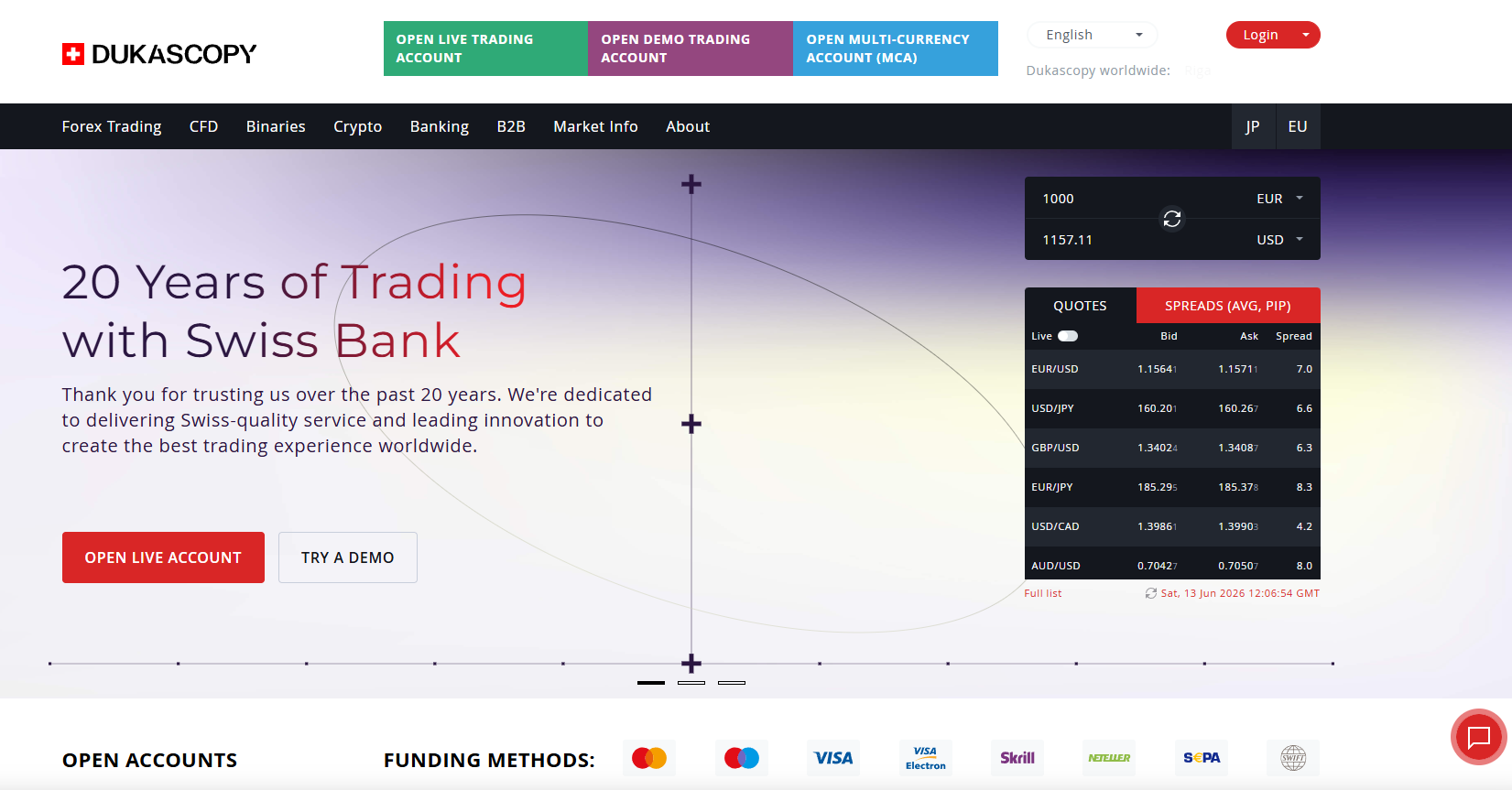
Dukascopy feels more like a traditional trading platform than a stripped-down app. That makes it great for traders who want:
- More screen space
- More room for analysis
- A setup that doesn’t feel squeezed into a phone-first mold
If you spend time studying charts, watching multiple windows, or working from a larger monitor, that style can be a real advantage. The platform feels more serious and more desktop-oriented,
That’s exactly what some traders want. It gives you space to think instead of forcing everything into one narrow view.
This isn’t the most casual pick on the list, and that’s fine. Dukascopy makes more sense for traders who prefer a familiar desktop workflow and want a broader view of the market before they place a trade.
Pros:
- Better suited to desktop use
- More screen space for chart analysis
- Traditional trading feel
- Good for users who prefer a more structured setup
Cons:
- Less convenient for traders who want a quick mobile-first experience
- Can feel heavier than simpler platforms
- Not the easiest choice for complete beginners
4. Deriv
Best for: traders who want an established broker with a long track record
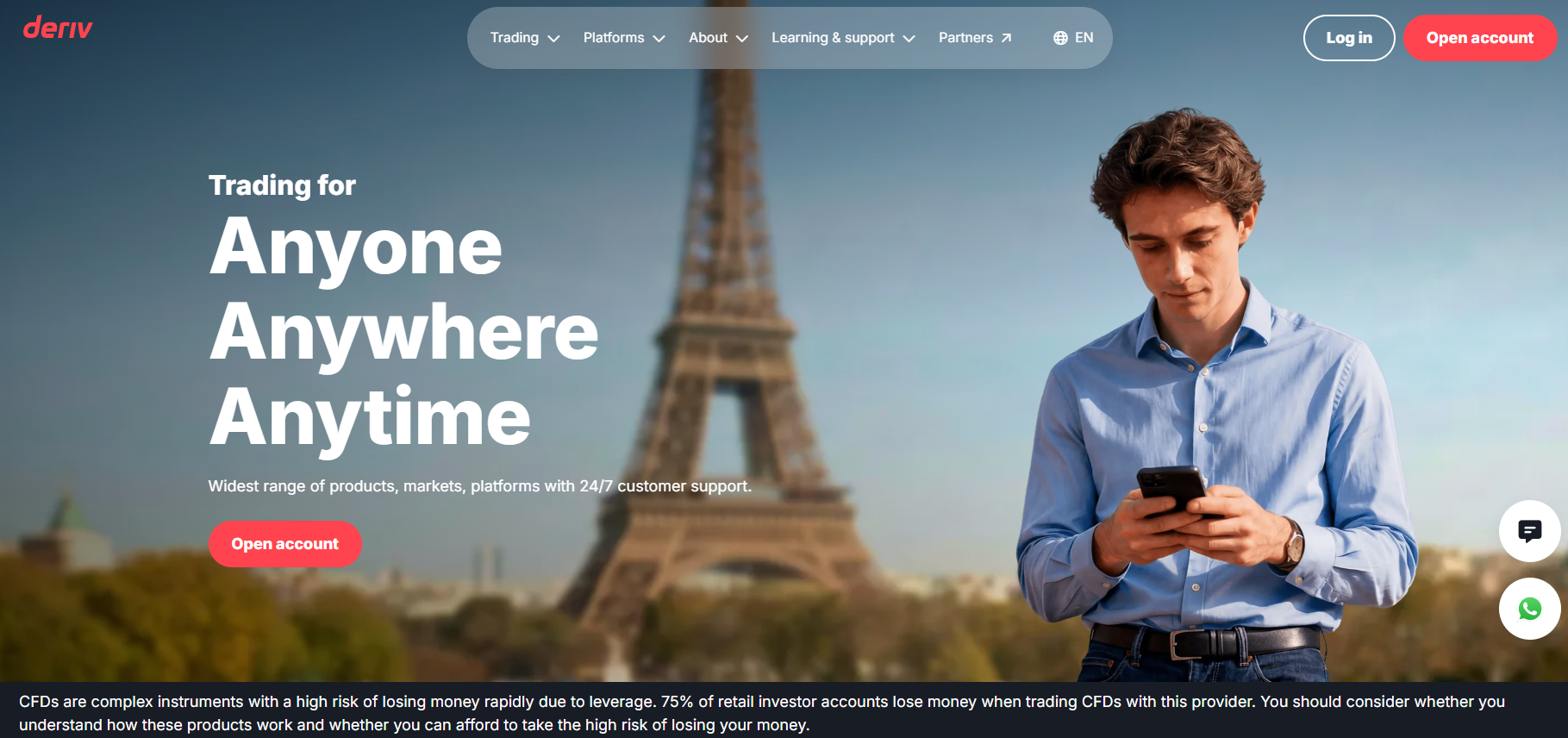
Deriv has been around long enough that many traders already know the name. People often trust platforms that have a track record and a recognizable setup. It feels stable.
The platform also offers a broader trading environment, which can appeal to experienced users who want more than a bare-minimum binary options screen. If you like having a broker that feels established and predictable, Deriv is one of the safer-looking names in this list.
The main draw here is reliability and comfort. You are not learning a brand-new style of platform from scratch, and that can make a big difference if you care about consistency.
Pros:
- Established name in the space
- Familiar platform experience
- Stable feel for users who value consistency
- Broader trading environment than some simpler brokers
Cons:
- May not feel as simple as the most beginner-friendly options
- Experienced users may still want to compare tools and terms carefully
- Familiarity does not replace checking current conditions
5. CloseOption
Best for: Traders who want a simple, direct trading experience
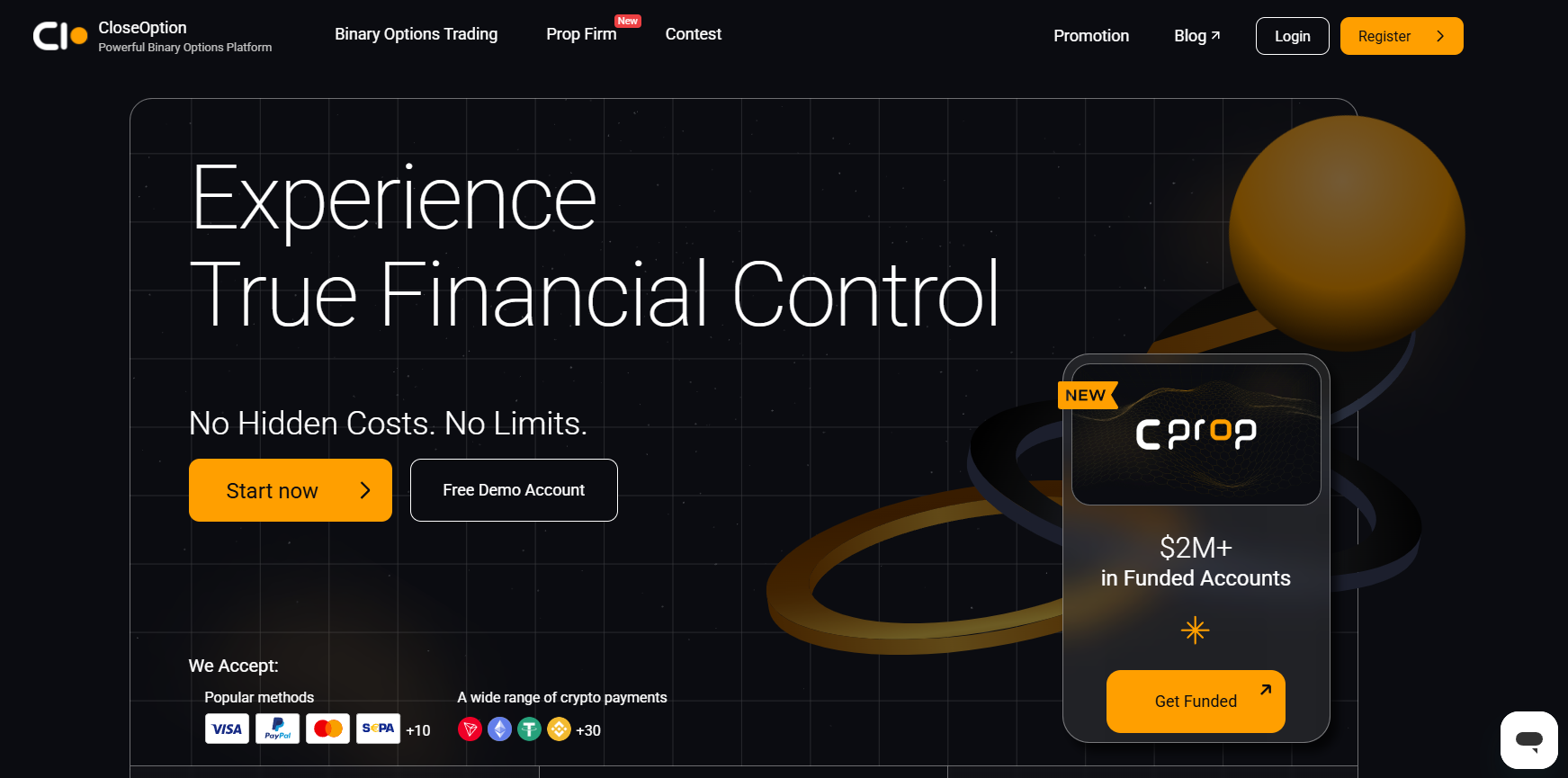
CloseOption is another platform that keeps the trading experience direct. For traders who want a no-frills approach, that can be a real advantage.
It tends to suit people who already understand the basics and want a platform that stays out of the way. You’re not fighting with a complicated layout.
CloseOption earns its spot because it feels practical. It is a good reminder that sometimes the best platform is the one that lets you act quickly without second-guessing every click.
Pros:
- Very low minimum deposit and trade size
- Simple platform that keeps the trading process direct
- Demo account available for practice
- Contest account option for users who want to test skills
Cons:
- Narrower asset range than broader multi-market brokers
- Not ideal for traders who want an advanced desktop platform
- Payouts and terms should be checked before trading
- Regulatory status and availability need careful country-by-country review
6. IQ Option
Best for: Beginners and budget-conscious traders
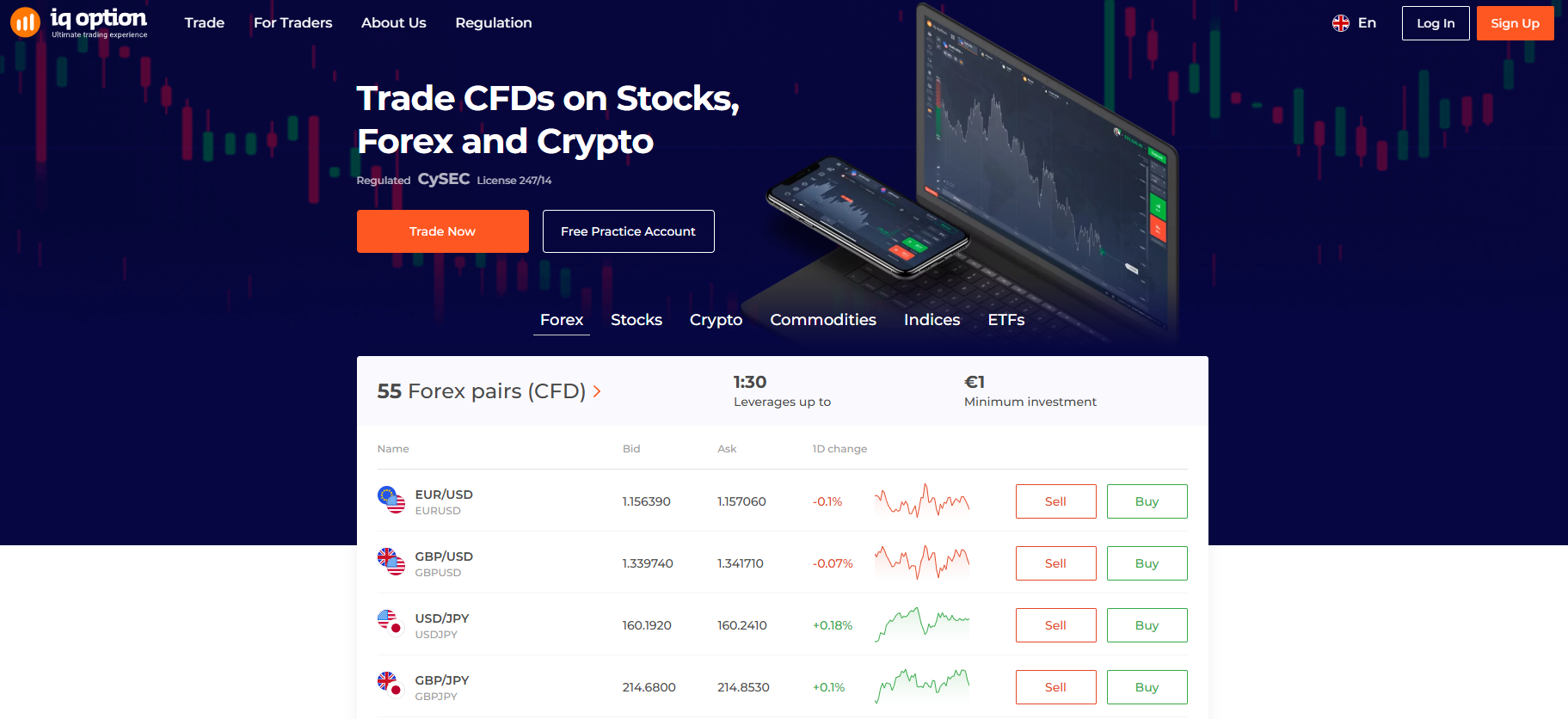
IQ Option has long been known for its platform quality. The interface feels polished, the charting experience is strong, and the overall setup is easy to work with, even if you are new.
It also appeals to traders who want to start small. A lower starting deposit can make the platform feel more approachable, especially if you are testing binary options for the first time or trying to keep your risk tight at the beginning.
That mix of being easy to use as well as affordable gets IQ Option on this list. It makes the overall trading process smoother.
Pros:
- Polished and easy-to-use platform
- Strong charting experience for newer traders
- Low starting deposit and low minimum trade size
- Broad asset selection compared with simpler binary platforms
- Good mobile trading experience
Cons:
- Availability depends heavily on country
- Binary options access may not be the same for every user
- Proprietary platform may not suit traders who prefer MT4-style tools
- You still need to check fees, withdrawal rules, and local restrictions (it can differ based on location)
How to choose the right platform for your trading style
The best binary options platform is not always the biggest name or the one with the flashiest homepage. It’s the one that fits:
- How you trade
- How much you want to risk
- How much time you want to spend learning the ropes
If you want a cleaner path, match the platform to your habits first. A mobile trader needs different tools than someone glued to a desktop all day. A small account needs a different setup than a trader who wants more screen space and deeper chart work.
Best for beginners, mobile users, and small deposits
If you’re just starting out, keep the platform simple. A clean layout, a working demo account, and a low minimum deposit matter more than a long list of extras you may never touch.
Look for these traits first:
- Simple navigation that lets you place trades without hunting through menus
- Demo access so you can practice before putting real money at risk
- Low deposit requirements if you want to start small
- Low minimum trade size so one trade does not eat your whole balance
- A strong mobile app that feels easy on a phone, not cramped
- Clear payout info before you confirm a trade
Best for chart watchers, active traders, and desktop setups
If you spend more time studying price action than tapping through a phone app, choose a platform that gives you room to work. Desktop-friendly setups are better for traders who want larger charts, more tools, and less screen clutter.
That matters during longer sessions. A bigger layout makes it easier to spot trends, compare time frames, and keep track of your trade without feeling squeezed into a mobile-size view.
Good desktop platforms usually offer:
- Better chart visibility
- More space for indicators and order panels
- Easier multi-window use
- Faster review of past trades and setups
Dukascopy fits this style better than the more mobile-first options. If your screen is your main workspace, that kind of structure can make trading feel more deliberate and less rushed.
Best for traders who care most about trust and withdrawal speed
A slick interface means nothing if the broker is slow with payouts or hard to reach when something goes wrong. Reputation, support, and withdrawal handling deserve as much attention as chart tools.
Before you open an account, check how the platform explains its rules. Read the withdrawal terms, look at support hours, and see whether the broker is clear about verification and processing times. Bonuses can be noisy, but they should never be the reason you choose a platform.
A good short checklist looks like this:
- Read the withdrawal policy before depositing.
- Check whether support is easy to contact.
- Look for clear company details and platform rules.
- Compare payout handling, not just promo offers.
Deriv and other established names are great if you want that extra sense of stability. If getting your money out matters the most, that should be the first filter.
Common binary options mistakes to avoid before you sign up
A binary options platform can look great on the surface and still be a poor fit once you dig into the details. The biggest mistakes usually happen before the first trade, when people:
- Rush past bonuses
- Skip the fine print
- Sign up without testing how the platform actually works
Don’t chase the biggest bonus first
A large bonus can look attractive, but it often comes with strings attached. Some offers lock up withdrawals until you meet trading volume targets. And those targets can be much harder to hit than they first appear.
Before you accept anything, read the bonus terms line by line. Pay close attention to whether the offer affects your ability to withdraw deposits, profits, or both. If the rules are buried or unclear, treat that as a warning.
A better approach is simple:
- Compare the bonus with the withdrawal conditions
- Check whether the bonus is optional
- Look for trading volume requirements
- Confirm whether you can decline the offer
A big bonus is not a good deal if it turns your money into a hostage.
Don’t skip the demo account or terms page
A demo account is one of the easiest ways to test a platform without risking real money. It lets you check the layout, trade flow, chart speed, and order confirmation process before you fund an account.
A platform can feel smooth in a sales pitch and awkward in practice. A few demo trades will show you whether the app is clean, whether charts are readable, and whether the buttons are where you expect them to be.
The terms page matters just as much. That is where you find the details people often regret missing later, like:
- Withdrawal fees
- Minimum trade sizes
- Deposit and payout limits
- Inactivity charges
- Bonus restrictions
- Account verification rules
The bottom line
The best binary options trading platform is the one that fits your goals, your location, and how much complexity you can live with.
If you want a simple place to start, Pocket Option is the easiest name to go with. If you prefer a more desktop-friendly setup, Dukascopy is the better fit. If you want reputation, familiarity, and a longer track record, go with Deriv.
- Keep the choice practical: Don’t pick a platform because the homepage looks polished. Pick it because the account rules make sense, the payouts are clear, and the withdrawal terms don’t feel slippery.
- Check the basics before you deposit: Before you fund any account, compare regulation, fees, payouts, and withdrawal rules. That quick check tells you way more than a flashy bonus.