Key highlights:
- JPMorgan says the crypto market is at risk if the CLARITY Act fails to pass
- One year after the House passed the CLARITY Act, the bill appears stuck in the Senate
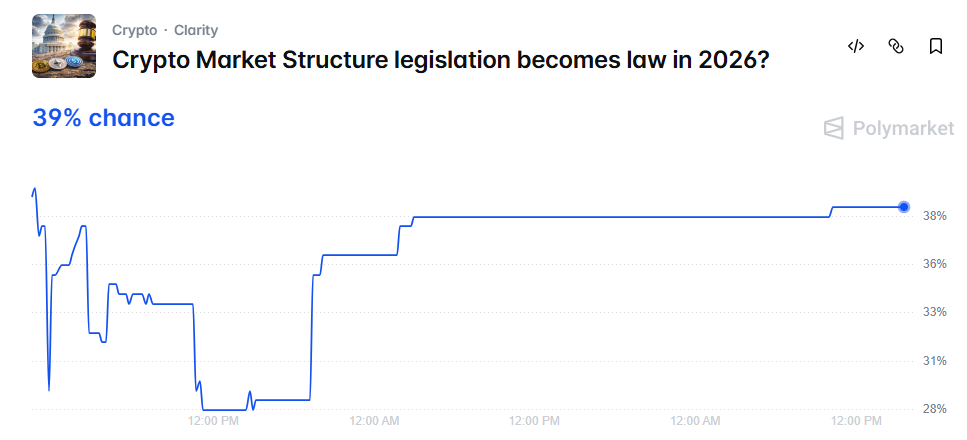
- Odds for CLARITY Act passage in 2026 have fallen to new lows in recent days
Wall Street giant JPMorgan has warned that uncertainty surrounding the passage of the CLARITY Act will affect digital asset prices. Odds for CLARITY Act passage in 2026 have fallen to new lows as lawmakers bicker over the bill’s finer details, despite Trump agreeing to a key ethics provision.
CLARITY Act uncertainty holds crypto from massive gains, says JPMorgan
In a note to clients, JPMorgan warned that the falling odds for CLARITY Act passage are a major stumbling block for a crypto breakout. The analysts, led by Nikolaos Panigirtzoglou, forecasted that if the bill becomes law, it will trigger a strong rally for Bitcoin (BTC), Ethereum (ETH), and other altcoins.
Apart from price action, JPMorgan noted that crypto markets are also at risk from bad actors taking advantage of the meteoric rise of tokenization and mainstream adoption of blockchain applications. If passed into law, the CLARITY Act will establish clear rules for digital assets in the US, with JPMorgan noting that it will keep capital and talent in the US.
“The longer the approval of the CLARITY Act is postponed, the greater the threat to crypto markets from the growth of tokenization and blockchain-based applications,” read the JPMorgan note.
Previously, JPMorgan CEO
Several factors account for the falling odds, with pundits pointing to Senators turning their gaze to more pressing issues. Furthermore, passage is tipped to be interrupted by Congress’ August recess and midterm Congressional elections, weighing on the odds of passage in 2026.
Meanwhile, investment bank Jefferies warned that the bill faces significant hurdles despite passing the Senate Banking Committee stage. Particularly, a Republican version of the bill with updated ethics provisions drew criticism from a handful of Democrats to the dismay of CLARITY Act backers.
Treasury Secretary Scott Bessent described the delays as “disappointing” while urging the Senate to schedule an immediate vote for the CLARITY Act. To pass the US Senate and clear standard legislative hurdles, the bill requires 60 votes. If all Republican members vote in favor of the bill, it still requires 9 Democratic votes to proceed, with lobbyist groups working frantically to secure the necessary support.
Source:: JPMorgan Blames CLARITY Act Delay For Crypto Market Bearishness