Key highlights:
- A US CBDC ban is moving closer as the Senate approved the Housing Act.
- The bill is now sent to the White House.
- Trump is expected to sign the bill into law soon.
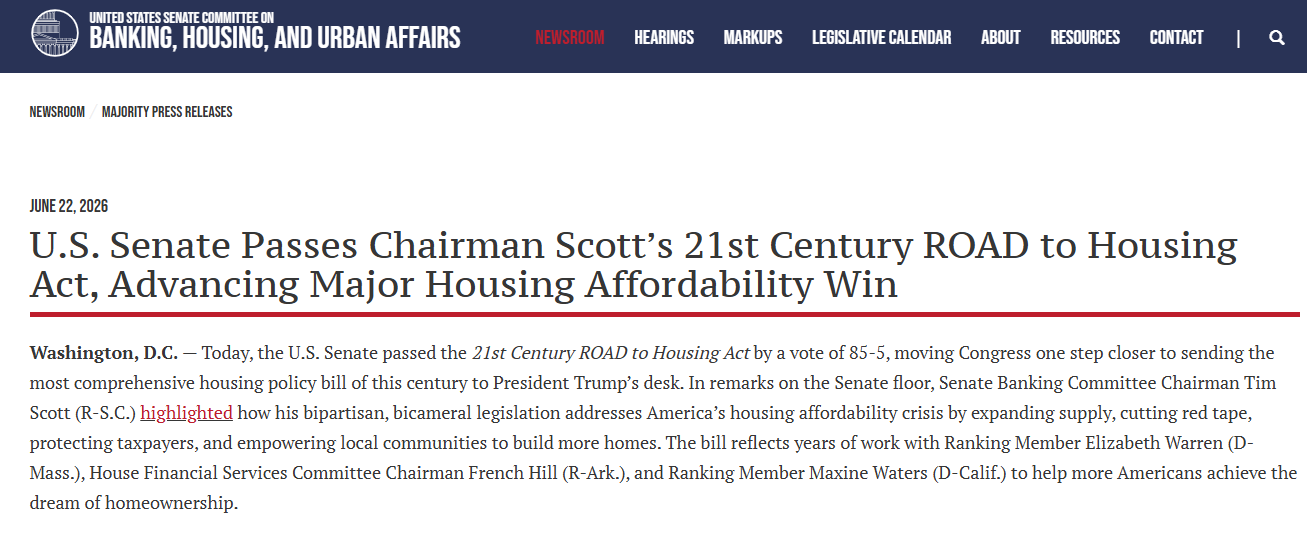
As the United States is increasingly taking initiatives to foster the growth of the crypto industry, another major bill is nearing its final passage. The US Senate has reportedly approved the 21st Century ROAD to Housing Act. The housing bill is now sent to President Donald Trump’s desk.
Notably, the bill includes a provision that restricts the Federal Reserve from issuing a central bank digital currency (CBDC). If President Trump signs the bill into law, the Fed will not be able to launch a digital currency until 2030.
US Housing Bill puts CBDC plans on ice
The US Congress has approved the 21st Century ROAD to Housing Act, sparking widespread optimism across the crypto industry. While the bill primarily focuses on housing affordability and homeownership, it has an indirect connection to crypto.
Source: banking.senate.gov
The Housing Act includes a provision that bars the Federal Reserve from issuing a CBDC until the end of 2030. The clause read,
“[The central bank] may not issue or create a central bank digital currency…directly or indirectly through a financial institution or other intermediary.”
Although the Housing Act is not directly about crypto regulation, it still supports one of the industry’s key policy preferences. Over the past few years, crypto advocates and lawmakers have been opposing the idea of a US government-backed digital dollar. According to them, a CBDC could expand federal control over financial activity, challenging crypto’s notion of decentralization.
Amid growing Republican opposition to the idea of a US CBDC, lawmakers included the anti-CBDC clause in the housing bill. Although the central bank was not actively preparing to launch the asset, the latest move marks a major win for the crypto industry.
The House approved the bill earlier by a 396-13 vote. Now, the Senate version has been passed with a strong 85-5 vote on June 22. The bill is now sent to the White House for its final passage into law.
Will Donald Trump pass the bill?
Currently, the possibility of the Housing Act being passed by President Trump is very high. As the bill has already cleared both chambers of Congress with strong bipartisan support, it is politically easier for Trump to sign it into law.
Also, the legislation closely aligns with the president’s policy. Considering housing, the bill includes clauses that aim to improve affordability and limit large investor control in the market. On the crypto side, Trump has been opposing the Fed’s launch of a CBDC. Previously, Trump signed an executive order to ban the launch of a CBDC, asserting that it could “threaten the stability of the financial system, individual privacy, and the sovereignty of the United States.”
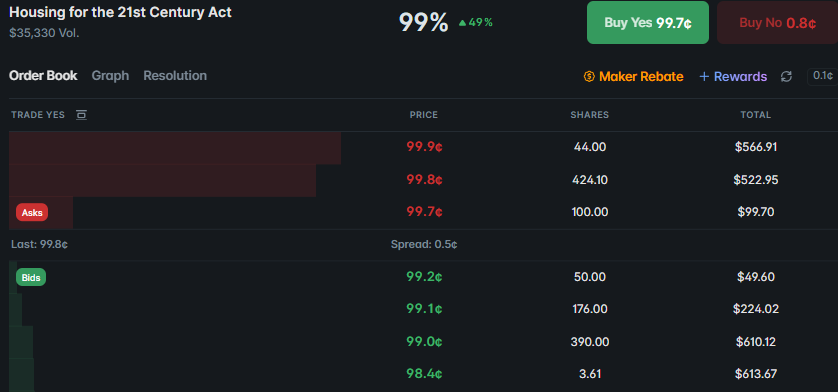
Source: Polymarket
According to Polymarket, the odds of the housing bill becoming law in 2026 are high at 99%. This indicates that the market remains highly optimistic about the White House signing the bill soon.
CBDC ban will not impact stablecoins
It is worth mentioning that the housing bill’s CBDC provision does not impact stablecoins. While the bill aims to shut the door on a CBDC launch in the US, it leaves privately issued stablecoins untouched.
Thus, the ban on CBDCs is a major positive development for fiat-backed cryptocurrencies. Companies can continue issuing stable tokens without having competition from a digital dollar.
Source:: Congress Just Approved a Bill That Could Put a US Digital Dollar on Ice Until 2030