Key highlights:
- Aave will phase out 75 low-activity asset reserves as part of a protocol-wide effort to reduce risk and operational costs
- Aave is removing underused lending markets affecting $113.7 million in positions, saying many no longer generate enough activity to justify ongoing maintenance
- However, Aave is expanding on stronger networks, with the protocol recently surpassing $100 million in deposits on its Monad deployment
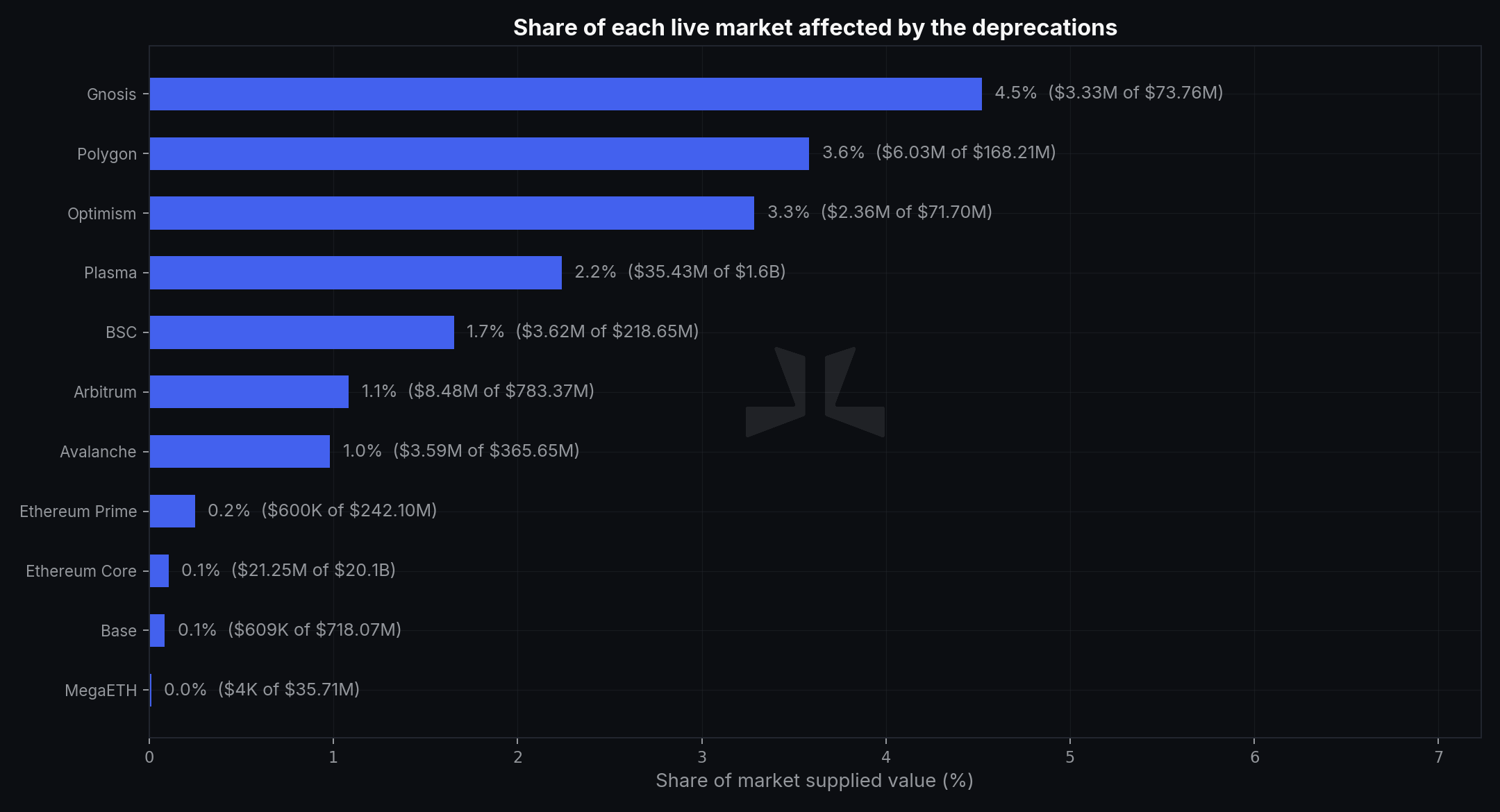
Aave is deprecating 75 low-adoption asset reserves and winding down deployments on six blockchain networks to reduce the protocol’s technical complexity and economic risk. The changes will affect $98 million in supplied assets and $15.6 million in outstanding debt, but pundits are keeping their eyes on the upsides.
Six blockchain deployments to be wound down
According to an
Kulechov noted that the move forms part of the Aave Risk Framework and Technical Asset Listing Framework. The framework is designed to improve the protocol’s’s long-term sustainability by removing underutilized markets that increase operational and technical overhead.
Furthermore, Aave identified structural reasons for removing some assets. Bridged tokens such as USDC.e and USDbC are being retired where the native versions already exist, while MaticX is being removed because the issue is sunsetting the token.
While Aave is winding down underperforming deployments, the protocol continues to gain traction on newer blockchains. In early July, Aave deposits on Monad topped $100 million, highlighting its strategy of concentrating resources on markets with stronger user activity.
Wind-down will happen gradually
Rather than shutting markets immediately, Aave plans to phase them out over time to give users an orderly exit. The protocol will freeze affected reserves, preventing new deposits, borrowing, and the use of assets as fresh collateral.
Furthermore, it will reduce supply and borrow caps to one unit and increase reserve factors on borrowed assets, lowering yields for suppliers and encouraging them to withdraw liquidity. If borrowers fail to repay, Aave may later increase borrowing costs through interest rate adjustments and, where necessary, gradually lower liquidation thresholds to reduce outstanding collateral exposure.
For the six deployments being retired, the proposal applies the same measures across every reserve simultaneously, with reserve factors raised to 99% and the base borrowing rate increased to 5%.
Hours after the announcement, the AAVE price gained nearly 2% to cancel out the losses from the previous day. Meanwhile, the AAVE price has rebounded from its yearly lows, buoyed by rising wallet activity on the Avalanche blockchain.
Source:: Aave to Remove 75 Low-Use Asset Reserves in Risk Overhaul, Exits Six Blockchains