Key highlights:
- The IMF says Brazil’s dependency on stablecoins could have far-reaching effects for the broader economy.
- Stablecoins have led Brazil’s crypto market growth for nearly 10 years, with dollar-denominated assets leading the charge.
- Tether’s USDT holds a sizable share of the market, followed by Circle’s USDC.
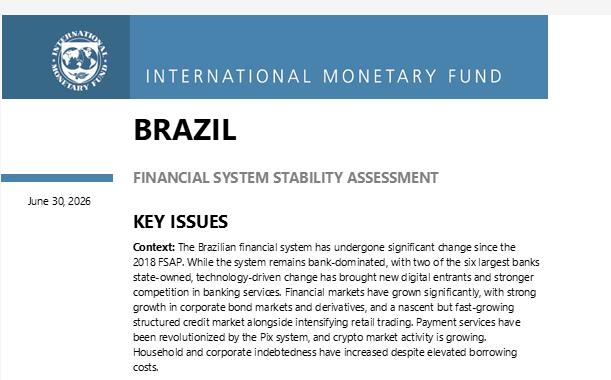
The International Monetary Fund (IMF) has called for stronger oversight of Brazil’s rapidly expanding cryptocurrency market. The IMF warned that the country’s growing reliance on US dollar-pegged stablecoins will expose its financial system to greater cross-border risks as digital asset adoption accelerates.
Stablecoins dominate Brazil’s crypto growth, but IMF raises alarm
In its latest
Per the IMF, stablecoins have led the growth of Brazil’s crypto market since 2017 and now account for a significant share of cross-border crypto activity. At the moment, cross-border crypto flows currently outpace traditional forms of capital movement in Brazil.
The IMF said the growing use of dollar-backed stablecoins raises concerns about financial stability because they can facilitate rapid capital movements during periods of market stress.
Meanwhile, the IMF has acknowledged that Brazil’s central bank has made progress in developing a framework for crypto asset service providers. However, it remarked that there are gaps around customer asset protection and rules governing stablecoin issuance.
Furthermore, the IMF urged Brazilian authorities to tighten compliance with anti-money laundering (AML) and counter-terrorist financing (CFT) standards. In their submission, Brazil’s finance regulators should understand the links between crypto markets and the traditional financial sector.
Brazil tightens cross-border crypto payment rules
The IMF’s assessment comes months after Brazil’s central bank introduced new rules governing international transactions involving digital assets. In April, the apex bank issued Resolution BCB No. 561, which amended regulations for electronic foreign exchange providers and prohibited the use of cryptocurrencies for certain international payments.
Under the new framework, transactions between eFX providers and foreign counterparties must be settled through conventional foreign exchange transactions or movements in non-resident Brazilian real accounts.
Meanwhile, Brazilians are increasingly turning to stablecoins for remittances, citing low cost and speed compared to traditional alternatives. Others are leaning on USD-backed stablecoins as a hedge against inflation as Brazil navigates an uncertain economic climate.
Experts are tipping stablecoin use to surge even higher in Brazil from the ripple effects of the US passing the CLARITY Act. Amid the projected numbers, the IMF says the “cryptoization” of the local economy will adversely affect commercial banks and the broader Brazilian economy.
Source:: IMF Warns Brazil’s Stablecoin Market Is Growing Faster Than Traditional Capital Flows